
HITEC 2026 Debrief

Updated: Aug 5

The National Center for Next Generation Manufacturing, funded by the National Science Foundation, served as an executive producer of the annual High Impact Technology Exchange Conference (HITEC), held in Austin, TX, this year. Highlights of the 2026 HITEC included a passionate keynote speech by Mark C. Perna, acknowledgments and insights from NSF Program Director Olga Pierrakos, and extensive networking and learning among industry, community college, and advanced technological education grantees during the conference sessions.

The Center would like to emphasize the different sessions we participated in and organized. Although we collaborated with numerous partners, we also attended additional sessions to gather further insights and expand our network in advanced manufacturing career technician education.
Preconference Special Interest Group (SIG) and Workshops
The preconference sessions took place between Monday and Tuesday, July 27th and 28th, 2026. The first session supported by the NCNGM was a workshop on Emotional Intelligence (EQ) led by John Birch, CEO of The Birch Group LLC. Participants were able to delve into their Emotional Intelligence (EQ) profile, apply their strengths in professional settings and classrooms, and address weaknesses or gaps in their communication styles. The session was also a great way for preconference attendees to learn that emotional intelligence is a highly sought-after skill set that employers value across the workforce, regardless of standing, from entry-level shop-floor positions to C-Suite executives.


The second preconference session was the National Center for Next Generation Manufacturing Special Interest Group (SIG) complimentary to registered attendees. The session began with an introduction to what the Center offers to community colleges nationwide. Co-Principal Investigator Tim Baber of Colleges of the Canyons, California, and the Associate Dean of Workforce Development Dan Davidchik of Central Community College, Nebraska, spoke of their programs at their respective institutions.
Another highlight was the student panel of three students from Connecticut State Colleges and Universities (CSCU) System. Jeannie Tran, a recent graduate of Connecticut State Community College Gateway campus, spoke about applications of electrical and computer engineering in her courses. Diego Angeles, who graduated from Connecticut State Community College Manchester campus, also talked about the applications of professional skill-building in a technical field. Jacob McCann of Central Connecticut State University highlighted the MET2 robotics project; the primary goal was to engineer and optimize a servo-driven power transmission system that minimizes vibration from external sources. MET2 is a collaborative winter intersession program and semester-long project for community college and university students, supported by the NCNGM. Find out more about these and other student projects at www.met2program.org.


After a brief icebreaker game called Real or Sci-Fi? about applications of Artificial Intelligence in manufacturing, the group broke out into groups to discuss AI applications in their manufacturing programs, how to balance foundational skill sets with emerging technologies, and what sort of professional development might be beneficial for their program. If they had previously participated in our conference sessions, webinars, or professional development opportunities, we heard about what was helpful and what they learned from it.
Download the "Real of Sci-Fi?" Presentation below to learn more:
Main Conference Sessions

The NCNGM collaborated with Dr. Suj Chandrasekhar, Founder of Strategic Insights Inc., to carry out an industry-wide survey that inquired about the impact of AI on their companies, their plans for investing in these technologies, and whether they are currently integrating these technologies into their manufacturing processes. Numerous respondents highlighted that AI and other emerging technologies are a priority for them. Consequently, many workers, both new and existing, require the necessary AI literacy and applied AI skills to improve the work they are trained for.

Another session titled "Growing from ChatGPT to Autonomous Agents: Reimagining Teaching and Learning" was delivered by John Jagtiani, a Professor and Department Chair for the Computer Information Systems, Computer Science, Data Science, and Business Intelligence Programs at Connecticut State Community College. He was joined by his student, Thomas Donofri, who is pursuing an Associate of Science in Computer Information Systems. Together, they explored how AI applications impact coursework, examining both the instructor's perspective and how students are expected to integrate AI into their studies. The session also covered strategic, pedagogical, and governance implications, as well as the competencies higher education institutions must develop as AI becomes a foundational element rather than an optional one.

Gary Mullet, a professor and Department Chair of Advanced Engineering Technologies at Springfield Technical and Community College in Massachusetts, presented at the session "AI and Industrial IoT’s Evolving Role in Industry 4.0". This session explored the role that AI and Industrial Internet of Things (IoT) are playing in the increasing implementation of Industry 4.0 and Smart Manufacturing. He also examined the two-year institution's critical role in preparing the next-generation workforce in this area and the cross-disciplinary nature of that technical workforce. Mullet also provided educators with resources on how to apply AI and machine learning in the manufacturing environment through FANUC America Corporation and the National Applied AI Consortium, and encouraged all to participate in the NCNGM's Community of Practice.
Become a member of the NCNGM Community of Practice with this link.
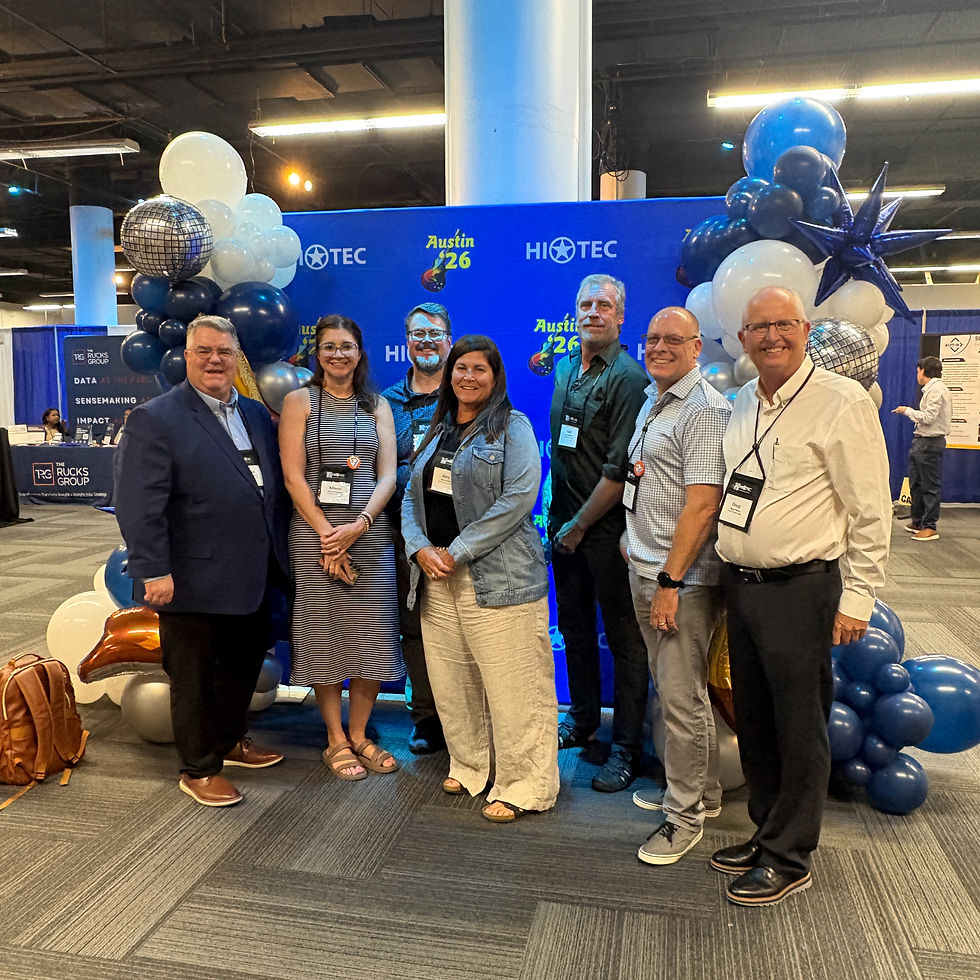
Central Community College collaborates with the NCNGM and engages in other NSF ATE initiatives, such as the grants “Expanding Participation in Advanced Manufacturing DUE ATE # 2400465” and “Building Robust Mechatronics Pathways DUE ATE # 2500493,” also known as Project BUMP. The NCNGM has supported Central Community College through their Summer Mechatronics Professional Development program offered to high school, community college, and university instructors.
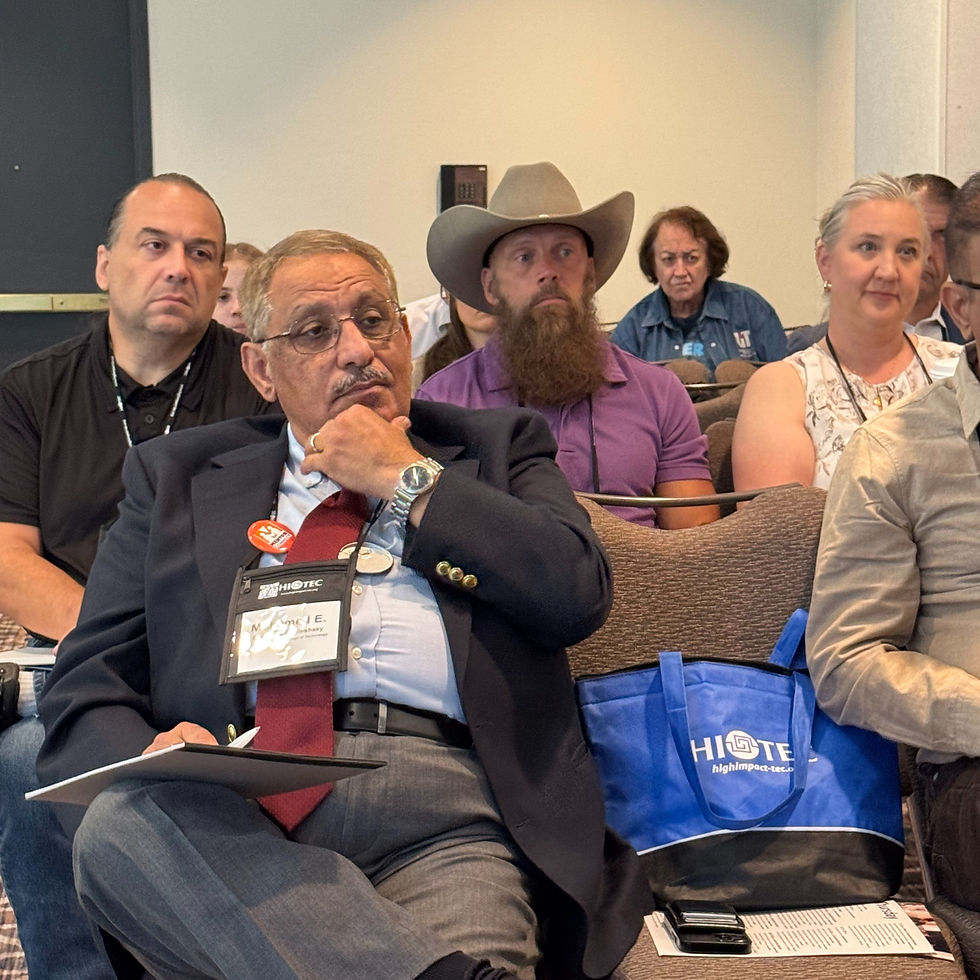
At the HITEC Conference, they presented in the sessions “An Overnight Success Journey: Building a Manufacturing Workforce at a Distance With Mechatronics” and “Advanced Manufacturing and ESL: Analysis of Our Successes and Challenges During Rollout,” shown below. Each session discussed the successes and challenges of the programs that Central Community College is implementing. One initiative is in partnership with South Central College (Minnesota), where both institutions shared their experiences in developing and delivering a distance mechatronics course sequence to enhance the workforce pipeline. They also covered recruitment strategies, attrition, and challenges with English as a second language (ESL) students in both classroom and lab settings. NSF Project BUMP will apply lessons learned from this project to reach students for training in mechatronics.
The NCNGM also attended industry and government agency panels to further enhance our resources and outreach efforts. One panel was titled "Telling the ATE Story on the Hill: Federal Legislative Engagement for College Faculty". This panel featured Lois Josefson, CEO, Greater MN Development Corporation; Olga Pierrakos, Program Officer, National Science Foundation; and David Anderson, Principal Investigator of Resource Collaborative for Immersive Technologies (RECITE).
This panel offered insights to the HITEC attendees on the appropriate ways to interact with state legislators regarding their affiliation with the National Science Foundation funding. While there are specifications regarding using federal funding and exercising caution and respect when interacting with federal employees, the NSF ATE grantees are allowed, as constituents, to express their achievements and challenges with their projects, consortiums, and centers. Tips on how to reach state and federal agencies were also offered, as it can be a time-consuming but rewarding process once the connection is made.

Another session was hosted by Manufacturing USA, the sponsor of the HITEC Conference 2026. This session offered an opportunity for HITEC attendees to learn first hand from two representatives of the 17 institute initiatives. The first presenter was Shelby Bledsoe, a project support specialist from the Institute for Advanced Composites Manufacturing Innovation. She introduced the audience to major programs called America’s Cutting Edge (ACE), Metallurgical Engineering Trades Apprenticeship & Learning (METAL), and ACE METAL Foundations.
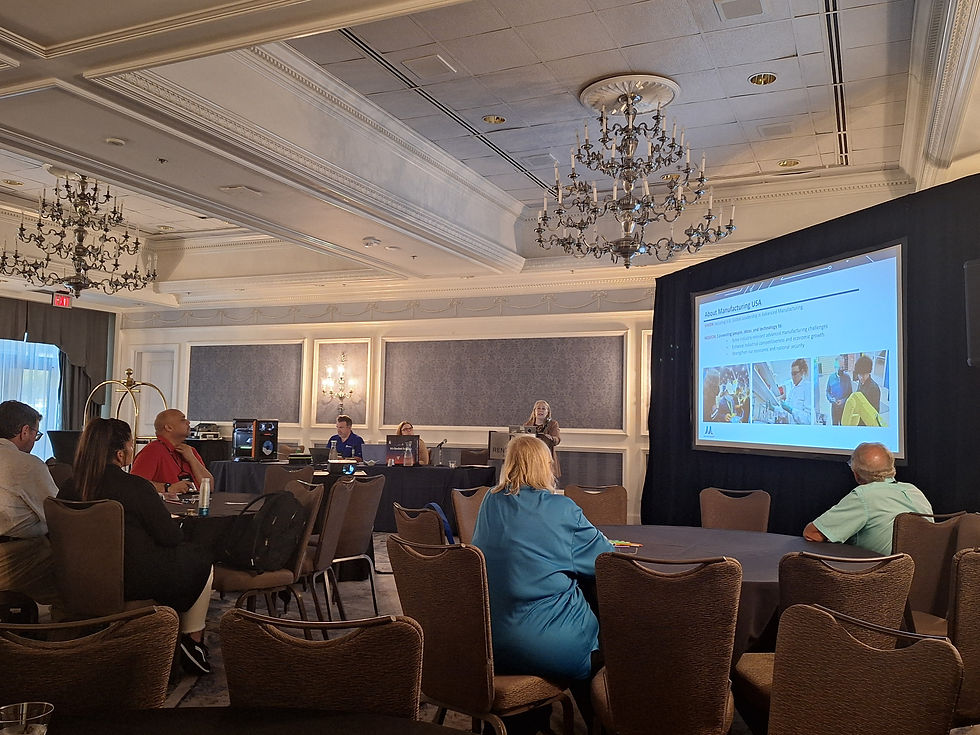
ACE is an initiative revitalizing America's machine tool workforce by offering rapid, free, practical training that merges online education with in-person bootcamps. It is supported by the U.S. Department of Defense’s Industrial Base Analysis and Sustainment (IBAS) Program, which familiarizes participants with CNC machining and advanced manufacturing. METAL tackles significant workforce gaps in casting and forging by linking students and workers to training, apprenticeships, and certifications in metallurgical engineering and trades. Supported by the Department of Defense’s IBAS Program, METAL enhances and diversifies the U.S. metal manufacturing workforce through industry-driven partnerships, stackable credentials, and practical learning experiences.
ACE METAL Foundations offers elementary students an introduction to manufacturing, engineering, and problem-solving through interactive, hands-on activities. Tailored for classroom settings, this program helps students enhance critical thinking, teamwork, creativity, and measurement skills as they explore the design, construction, and improvement of various objects.

The second speaker was Dr. Ed Herderick, who serves as the Director of Education and Workforce Development (EWD) at America Makes, an organization dedicated to advancing additive manufacturing and 3D printing technologies. In his presentation, Dr. Herderick provided an in-depth overview of the innovative 3D printing program. This bootcamp is a collaborative effort with the Missouri University of Science and Technology (Missouri S&T), where the curriculum was designed by For the Win Robotics. The program received significant financial backing from America Makes.
During his presentation, Dr. Herderick showcased engaging videos that highlighted the various activities and challenges the students faced throughout the drone challenge, which took place at the conclusion of the cohort. This challenge not only allowed students to apply the skills they had acquired during the week but also encouraged teamwork, problem-solving, and innovative thinking as they worked to design and 3D print functional parts for the prebuilt drones.
Dr. Herderick also did a live demonstration of flying a drone, and he had a 3D printer actively printing parts at the table, showcasing the real-time capabilities of additive manufacturing. The demo highlighted the technology's potential and also emphasized the program's focus on experiential learning, ensuring that students gain practical, hands-on experience in 3D printing.
Main Conference Keynotes, Awards and Luncheons

The main conference took place on July 29th and 30th. One key takeaway from the enthralling, fast-paced keynote speaker Mark C. Perna was "If the WANT TO is strong enough, the HOW TO will come!" This frames the concept of education with purpose, and Mark Perna introduced the Career Tree. This tree is a visualization of the career pathways that students want to explore and how they can achieve those goals through certifications or degree programs. A great example of how educators and community leaders can utilize these pathways can be explored at Mark C. Perna's website https://www.tfsresults.com.

The DeRocco Fellowship offers students enrolled in a postsecondary program, including community colleges, the opportunity to develop leadership skills and build professional networks during their summer advanced manufacturing work experience. The NCNGM supported the fellows by providing a national community of peers and industry leaders, including the opportunity to attend the HI-TEC Conference, and by enabling continued networking and professional growth through opportunities such as joining the NCNGM Community of Practice.
On the last day, Dr. Karen Wosczyna-Birch, the Director and Principal Investigator of the NCNGM, took part in a panel discussion about the influence of AI on the different sectors targeted by the Advanced Technological Education program centers. Together with other principal investigators, she explored the effects of artificial intelligence, addressing issues such as cybersecurity attacks, environmental concerns, and job security. The moderator and panel participants pictured below are as follows: Dr. Kristine Christensen, Director and Principal Investigator of Explore Cyber at Moraine Valley Community College; Dr. Karen Wosczyna-Birch, Principal Investigator, National Center for Next Generation Manufacturing (NCNGM); Andrew McMahan, Director, the Environmental and Natural Resources Technology Center (EARTh Center); Kevin Cooper, Principal Investigator, National Electric Vehicle Consortium (NEVC); and Michele Robinson, Senior Director, National Cybersecurity Training & Education Center (NCyTE).


Comments